
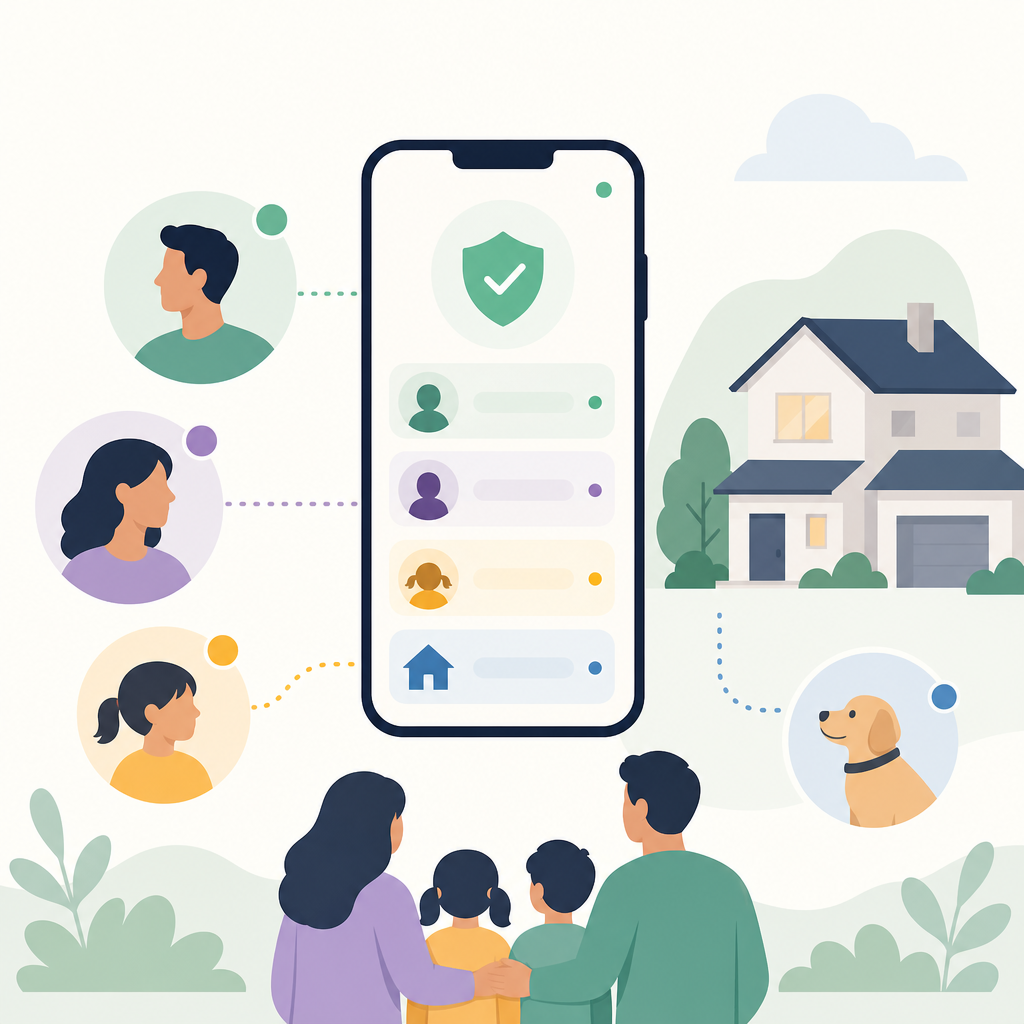
Short answer: If you need to know how to tell when someone is online on WhatsApp, open that person's chat and look for the online label under their name. For repeated family routines, use an online-status tracker only when the person understands and accepts the setup. That signal only means WhatsApp is open and connected; it does not prove they read your message, who they are talking to, or what they did. WhatsApp last seen and online guidance.
The messy part is not the label. It is the reason people check it. A parent may want to know whether a teenager is still awake at 1:12 a.m. before a school day. A sibling may be checking on an older relative who tends to reply only when they have the phone in hand. Those are different situations, and they need different boundaries.
How to tell when someone is online on WhatsApp
The direct method is to open the individual WhatsApp chat and read the status line under the contact name. If the person is currently visible to you, WhatsApp may show online; if they are not online, it may show a last seen time, depending on their privacy settings.
- Open WhatsApp on your phone or desktop.
- Tap the chat with the person you want to check.
- Look directly below the contact name at the top of the chat.
- If you see online, their account appears active at that moment.
- If you see last seen with a time, that is the last visible activity time, not a live status.
This is the cleanest manual check, but it has obvious friction: you have to keep opening the chat. It also creates a bad habit fast. Refreshing a chat every few minutes is not a family safety plan; it is a loop that can make everyone more tense.
What do online and last seen mean on WhatsApp?
Online means the account appears to have WhatsApp open and connected at that moment. Last seen means the last visible time that account was active, if the user allows that information to be shown.
Think of these as presence signals, not behavior records. They do not tell you which chat is open. They do not tell you whether a message was read. They do not tell you whether the phone is in the person's hand, sitting open on a desk, or briefly opened by accident.
A WhatsApp online tracker works with the same kind of presence signal, but it saves you from checking manually. The useful version of that idea is narrow: in an agreed setup, it logs when a monitored account appears online and can send a WhatsApp online notification. The unsafe version claims it can spy, read chats, or break encryption. Avoid that.
Why can't I see someone's online or last seen status?
If you cannot see the status line, the most likely reason is privacy settings. WhatsApp lets people limit who can see their last seen and online visibility, and those choices can differ by contact.
There are a few ordinary explanations before you assume anything dramatic. They may have hidden their last seen. You may have hidden your own visibility, which can limit what you see from others. You may be blocked, not saved as a contact, or in a chat history that does not meet WhatsApp's visibility rules. Sometimes the app is simply behind on syncing.
WhatsApp's settings labels and privacy controls can change. The setting to check is usually inside Settings > Privacy, under Last Seen and Online or a similarly named screen. Treat that path as a starting point, not as a promise that every iPhone, Android, WhatsApp Web, or regional build uses the same wording. If the other person has chosen not to share that signal, a legitimate tool should respect that boundary rather than promise a workaround.
Can a WhatsApp online tracker send notifications?
Yes, a WhatsApp online tracker can send notifications when a monitored account appears online or goes offline. The ethical scope is limited: use that alert only in an agreed setup, and treat it as online-time visibility, not message monitoring. It cannot read messages, recover deleted chats, show call contents, or bypass WhatsApp security.
This is where a family product such as When can fit, if the family has already agreed on the rule. A parent and teenager might use notifications for a bedtime boundary instead of repeated manual checking. The same idea can work for an older parent who wants a family member to notice long gaps in phone activity. The agreement matters more than the alert.
When is part of a product line from Frontguard. In this article, we describe the product category narrowly: WhatsApp online and last-seen notifications for agreed family visibility. We are not treating consent as a hidden technical fact the app can prove for every household; consent is the standard the user should meet before turning tracking on. If any app says it can secretly monitor a person's WhatsApp messages, treat that as a warning sign.
How we checked: We reviewed this revision for claims that depend on WhatsApp settings or When/Frontguard behavior. Anything needing live product proof was softened into version-neutral guidance: settings labels may move, local law may differ, and consent is framed as the required ethical use case, not an app-enforced guarantee.
Claim: A WhatsApp last seen tracker is useful only when everyone understands what is being logged and why.
Why this matters: The visible signal is presence, not message content or intent.
Limit: Presence can be wrong or incomplete when privacy settings, app sync, or device behavior changes.
Action: Set a clear family rule before enabling notifications.
Manual checking vs an agreed WhatsApp last seen tracker
The right choice depends on frequency and trust. If you check once in a while, use WhatsApp itself. If the family has agreed to a repeated safety routine, a tracker reduces manual checking but adds a responsibility to use the data fairly.
| Method | What it shows | Best fit | Main trade-off |
|---|---|---|---|
| Manual WhatsApp check | Live online label or last seen, if visible | Occasional availability check | Easy to over-check and misread |
| Agreed tracker setup | Logged online sessions and notifications | Family routines, bedtime boundaries, agreed monitoring | Needs consent and clear limits |
| Spyware-style claims | Often promises chats, content, or hidden access | Do not use | High legal, ethical, and security risk |
The comparison is blunt on purpose. A tool that helps you notice an online pattern is not the same thing as a tool that spies on a private conversation. That line should stay bright.
How should families set up WhatsApp online notifications ethically?
Start with the conversation, not the software. A WhatsApp online notification is easier to justify when the person knows what will be tracked, who will see it, and when the setup will be reviewed.
- Name the reason. Say the real concern: bedtime, school focus, elder care, recovery from a stressful period, or shared household accountability.
- Define the data. Explain that the app tracks online and last-seen activity only, not message text, contacts, media, voice calls, or location.
- Set hours. A 24-hour alert stream is rarely necessary. For a teenager, bedtime hours may be enough. For elder care, morning and evening check windows may be better.
- Agree on who can view it. Keep access limited. If the data becomes gossip, the setup has failed.
- Review the arrangement. Family needs change. A rule that made sense during exams or illness should not quietly become permanent surveillance.
For minors, parents may have broader responsibility, but responsibility is not a blank check. For adults, consent is the baseline. Local privacy, harassment, workplace, and stalking laws can apply to monitoring behavior, especially without consent. If the context is conflict, employment, divorce, or a safety order, get proper legal guidance before using any tracker.
What are the limits of tracking WhatsApp online time?
The biggest limitation is interpretation. A record that someone was online at 11:48 p.m. does not explain why, who they spoke to, or whether it was intentional.
There are technical limits too. WhatsApp's own privacy settings can hide last-seen and online visibility. App updates can change how presence appears. Network delays can make a session look shorter or longer than it felt. A person may open WhatsApp to check a family group, authenticate a login, forward a photo, or clear a notification without reading the message you care about.
That is why tracking WhatsApp online time should be treated as a rough activity log, not a truth machine. It can support a conversation. It should not become the only evidence in a family argument.
What should you do first?
If you only need to know whether someone is available right now, open the chat and check the status line. If you need a repeatable family routine, use a tracker only after the family has agreed on what will be visible and why. If the real question is trust, a tracker will not solve that by itself.
The practical decision is this: use WhatsApp's built-in status for occasional checks, use When only for agreed family visibility, and reject any product that claims to break into private messages. Online status is a useful signal. It is not a substitute for consent, context, or a direct conversation.
Frequently asked questions
Can I tell when someone is online on WhatsApp without opening the chat?
Not reliably with WhatsApp alone. The built-in method is to open the chat and look under the person's name. A tracker can send alerts in an agreed family setup, but it should not be used as a hidden workaround for another person's privacy choices.
Does a WhatsApp online tracker read messages?
No legitimate family online-status tracker should read WhatsApp message content. A When-style setup should be limited to online and last-seen signals, and it should not bypass end-to-end encryption, show private chats, recover deleted messages, or expose call contents.
Why does someone show online but not last seen?
The person may allow online visibility while hiding last seen, or your own privacy settings may limit what you can view. WhatsApp's visibility rules can also vary depending on contact status, blocking, app version, and recent syncing behavior.
Is it legal to track someone's WhatsApp online time?
It depends on consent, age, relationship, location, and purpose. Tracking a consenting family member for a clear safety routine is different from secretly monitoring an adult. Local privacy, harassment, workplace, and stalking rules may apply, so check local law or get legal advice before using a monitoring tool.
Can online status prove someone ignored my message?
No. Online status only suggests the account appeared active. It does not prove the person opened your chat, read your message, or chose not to reply. Treat it as an availability clue, not proof of intent.
For the related workflow and its limits, read: WhatsApp's New Green Dot: Does It Really Show Who Is Online Right Now?.