

מעקב יעיל אחר המצב המקוון של בני משפחה מחייב התרחקות מבדיקה ידנית של זמני חיבור ומעבר לכלי מדידה מאובטחים ורב-פלטפורמיים. כלי מעקב אמין מספק מבט אוטומטי ואובייקטיבי על הרגלי השימוש באפליקציות הודעות במכשירים שונים, מבלי לפגוע בפרטיות המשתמש או בביצועי המכשיר.
לפני מספר שנים, כשעיצבתי אב-טיפוס למעקב אחר מיקום ומצב מקוון, בדקתי כלי ניטור גנרי על המכשירים האישיים שלי. בכל פעם שפתחתי את WhatsApp Web במחשב הנייד, הטלפון שלי רטט עם התראה. זה היה מתיש, לא מדויק לחלוטין ונטול הקשר. כמהנדס תוכנה שהקדיש שמונה שנים לבניית טכנולוגיות לבטיחות המשפחה, אותו אחר צהריים מתסכל לימד אותי שיעור יקר ערך: נתונים גולמיים ללא מדידה חכמה הם פשוט רעש. אם רוצים להבין באמת הרגלים דיגיטליים, חייבים לבחון את הארכיטקטורה של האופן שבו אנו מודדים אותם.
מדוע בדיקות ידניות מסורתיות כבר לא מספיקות היום?
במשך זמן רב, הגישה הסטנדרטית לבדיקת מצבם של בני משפחה הייתה פשוט פתיחת חלון הצ'אט כדי לראות את זמן ה"נראה לאחרונה" שלהם. זו הייתה בדיקה ידנית ונקודתית שדרשה מההורה להפריע למהלך היום שלו באופן אקטיבי.
כאשר משווים ניטור ידני למעקב אוטומטי, הפגמים בשיטה הישנה הופכים ברורים מאליהם.
בדיקה ידנית של "נראה לאחרונה"
- יתרונות: לא דורשת תוכנה נוספת; חינמית לחלוטין.
- חסרונות: מפריעה מאוד לסדר היום של ההורה; לוכדת רק רגע בודד בזמן ולא דפוס התנהגותי; מפספסת לחלוטין פעילות אם המשתמש הסתיר את הסטטוס שלו בהגדרות הפרטיות.
צירי זמן אוטומטיים של פעילות
- יתרונות: מרכזת נתונים לתרשימים קריאים; פועלת ברקע; מדגישה הפרעות בשינה ותקופות של עבודה ריכוזית.
- חסרונות: דורשת התקנה והגדרה של כלי ייעודי מצד שלישי.
המציאות היא שדפוסי הפעילות המקוונת שלנו התרחבו. לפי דו"ח ה-Mobile App Trends 2024 שפורסם על ידי Adjust, נרשמה עלייה משמעותית בסבבי השימוש באפליקציות ככל שמשתמשים עוברים בין מכשירים שונים. אנשים עוברים ללא הרף בין הטלפון למחשב. בדיקה ידנית פשוט אינה יכולה לקחת בחשבון נער שעובר מאפליקציית Telegram בטלפון ל-Telegram Web במחשב המשפחתי המשותף.
מה קורה כשמשתמשים באפליקציות מותאמות כמו GB WhatsApp?
בחיפוש אחר נראות טובה יותר, חלק מהמשתמשים פונים ללקוחות הודעות לא רשמיים ומותאמים (Modified apps). ניתחתי רבים כאלה במהלך השנים, והם מהווים סיכון אבטחתי עצום למשתמש.
בואו נראה איך לקוחות לא רשמיים משתווים לתוכנות אנליטיקה עצמאיות.
אפליקציות מותאמות (למשל GB WhatsApp)
- יתרונות: מציעות אפשרויות מובנות להקפאת סטטוס ושינויים בממשק.
- חסרונות: מדובר באפליקציות לא מורשות. הן דורשות ביטול של הגנות האבטחה במכשיר לצורך התקנה, מובילות לעיתים קרובות לחסימה לצמיתות של החשבון מהרשת הרשמית, ולעיתים קרובות מנתבות הודעות פרטיות דרך שרתים לא מאומתים של צד שלישי.
כלי אנליטיקה עצמאיים
- יתרונות: פועלים בנפרד לחלוטין מרשת ההודעות הרשמית; אינם דורשים שום שינוי במכשיר; אינם מהווים סיכון למעמד החשבון; מספקים גרפים אובייקטיביים של ציר הזמן.
- חסרונות: עוקבים רק אחר מטא-נתונים ציבוריים של המצב המקוון, מה שאומר שהם אינם יכולים לעקוף חסימות פרטיות מחמירות ברמת הרשת אם החשבון נעול לחלוטין.
שימוש באפליקציה מותאמת כדי לעקוב אחר הרגלי המשפחה הוא כמו הסרת המנעול מדלת הכניסה שלכם רק כדי לראות מי נכנס. זה פוגע בדיוק בבטיחות שאתם מנסים לאכוף.
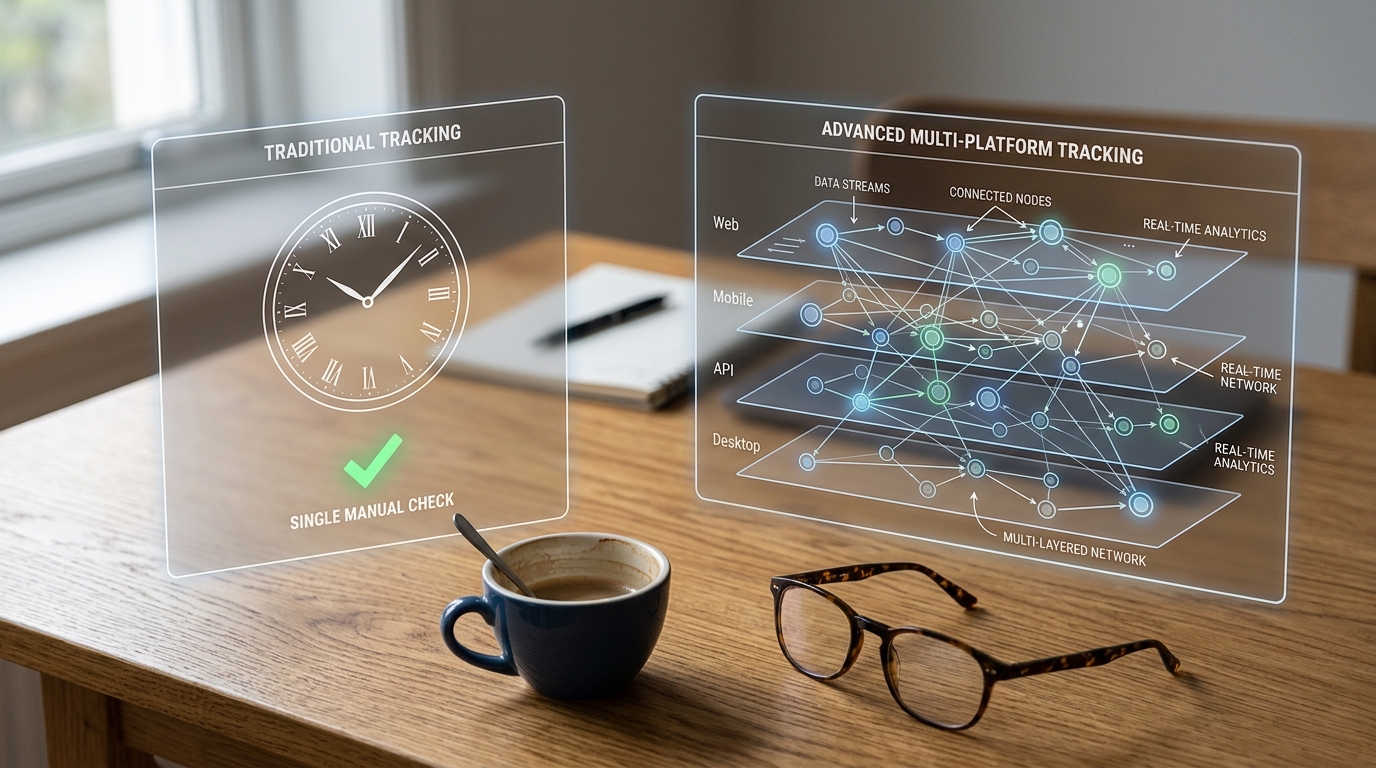
כיצד ניטור אפליקציה בודדת משתווה למדידה רב-פלטפורמית?
היסטורית, כלי מעקב התמקדו ברשת אחת. קניתם כלי לאפליקציה ספציפית, וזהו. אך התנהגות דיגיטלית היא מקושרת. אם תלמיד נמנע מהכנת שיעורי בית, הוא לא נמצא רק בפלטפורמה אחת.
נתונים מהתעשייה של Adjust מדגישים כי היעילות של אפליקציות לנייד נקבעת יותר ויותר על ידי ניתוח מבוסס בינה מלאכותית וארכיטקטורות מדידה רב-פלטפורמיות. התמקדות בערוץ בודד גורמת לעיתים קרובות לפערים במידע.
כלי מעקב לאפליקציה בודדת
- יתרונות: הגדרה ראשונית פשוטה יותר; לרוב זולים יותר בטווח הקצר.
- חסרונות: משאירים שטחים מתים משמעותיים. אם ילד מפסיק להשתמש באפליקציה אחת ועובר לאחרת, ההורה עלול להניח שהילד אינו מחובר וישן, מה שלעיתים קרובות אינו נכון.
כלי מעקב AI רב-פלטפורמיים
- יתרונות: הצלבת פעילות בין רשתות שונות; זיהוי סבבי שימוש חופפים (למשל, שימוש בלקוח שולחני ובנייד בו-זמנית); מספקים לוח בקרה מאוחד לכל האינטראקציות הדיגיטליות.
- חסרונות: עלולים לספק כמות מידע מציפה אם לוח הבקרה אינו מעוצב היטב.
השינוי הזה הוא בדיוק הסיבה לכך שפתרונות מודרניים הם הכרחיים, תוך התרחקות ממעקב אחר אפליקציה בודדת לעבר מדידה מקיפה יותר של טביעת הרגל הדיגיטלית של המשפחה.
מי באמת צריך כלי מעקב אונליין, ומי צריך להימנע ממנו?
בניית תוכנה מחייבת הבנה של זהות משתמש הקצה. לא כל כלי מתאים לכל סיטואציה.
עבור מי זה מיועד:
- הורים המנסים לקבוע גבולות בריאים לזמן מסך. לעיתים המצב המקוון של נער בשעות הלילה המאוחרות אינו סימן לצ'אט אינסופי; אולי הוא פשוט השאיר את מסך הטלפון דולק. נתוני ציר הזמן עוזרים להבחין בין שיחה פעילה לבין זמן מסך לא פעיל.
- פרילנסרים ועובדים מרחוק שרוצים לבצע בקרה על הסחות הדעת הדיגיטליות שלהם ולמדוד באיזו תדירות הם בודקים הודעות בשעות ריכוז.
- יחידות משפחתיות קטנות המתאמות לוחות זמנים בין אזורי זמן שונים.
עבור מי זה לא מיועד:
- אנשים המנסים לרגל אחר בני זוג מבוגרים. מעקב סמוי הורס את האמון. אם אתם מנסים לתפוס מישהו בשקר, ציר זמן של סטטוס לא יפתור את בעיות היחסים השורשיות שלכם.
- מעסיקים המנהלים עובדים מרחוק במיקרו-מנג'מנט. מעקב אחר כל פעם שעובד מתחבר לפלטפורמת הודעות יוצר סביבת עבודה רעילה ומניב מדדי פרודוקטיביות חסרי תועלת.
אם אתם רוצים נתונים ברורים ואובייקטיביים כדי להתחיל שיחות בריאות על זמן מסך, When: WA Family Online Tracker תוכנן ישירות למעקב אחר "נראה לאחרונה" ב-WhatsApp וב-Telegram. הוא מארגן את הנתונים לדפוסים קריאים במקום להפציץ אתכם בהתראות בודדות.
מהם הקריטריונים המרכזיים לבחירת כלי מעקב?
אם החלטתם שמעקב אוטומטי אחר סבבי שימוש מתאים לצרכי המשפחה שלכם, השלב הבא הוא הערכת הערך הטכני של האפשרויות הזמינות. בהתבסס על הרקע ההנדסי שלי, אני ממליץ לסנן אפליקציות דרך שלושה קריטריונים טכניים ספציפיים.
ראשית, בחנו את ארכיטקטורת הפרטיות. האם הם מכבדים את הנחיות מערכת ההפעלה? נתונים עדכניים מראים שמשתמשים מוכנים יותר ויותר לשתף נתונים, אך ורק כאשר האפליקציה שקופה לגבי אופן השימוש בהם. כלי מעקב לגיטימי צריך להסביר בבירור את מדיניות שמירת הנתונים שלו.
שנית, בדקו את ביצועי האפליקציה. סטנדרטים בתעשייה מגלים שרוב המשתמשים ימחקו אפליקציה איטית לאחר השימוש הראשון. כלי מעקב המריץ אלגוריתמים רב-פלטפורמיים מורכבים חייב עדיין להיטען במהירות ולפעול ביעילות מבלי לרוקן את הסוללה.
שלישית, ודאו את הדיוק שלו מול לקוחות שולחניים (Desktop). כלי מעקב באיכות נמוכה ייכשל ברישום סבבי שימוש שמקורם בדפדפן אינטרנט. כלי איכותי יתעד במדויק פעילות בין אם היעד משתמש במכשיר הנייד שלו ובין אם בלקוח אינטרנט מחובר.
כיצד בונים גבולות דיגיטליים בריאים יותר בהמשך הדרך?
איסוף נתונים הוא רק הצעד הראשון. המטרה של מדידת עקבות דיגיטליים אינה לבנות מאגר ראיות נגד ילדיכם; המטרה היא לבסס בסיס לשיחה.
כשיושבים יחד מול ציר זמן מאוחד המראה פעילות בשעות מאוחרות, ניתן לשאול שאלות מושכלות. אתם עוברים מהאשמה ("אתה תמיד בטלפון") לתצפית ("שמתי לב שהיית מחובר מאוחר אתמול בלילה, הכל בסדר?").
כלים שתוכננו על ידי צוותי פיתוח המתמקדים בבטיחות המשפחה — כמו חבילת האפליקציות הרחבה שנבנתה על ידי Frontguard — שואפים לספק בהירות ולא שליטה. על ידי הבנת ההבדלים בין בדיקות ידניות, לקוחות צד שלישי פרוצים ומדידה רב-פלטפורמית אובייקטיבית, תוכלו לבחור מערכת שבאמת תומכת ברווחת המשפחה שלכם.