

What When: WA Family Online Tracker Helps You See on WhatsApp and Telegram
When: WA Family Online Tracker helps organise supported visible online activity on WhatsApp and Telegram. Use it with appropriate agreement, and check current platform support. Hidden status or limited visibility is not evidence that the app can bypass another person's privacy settings.
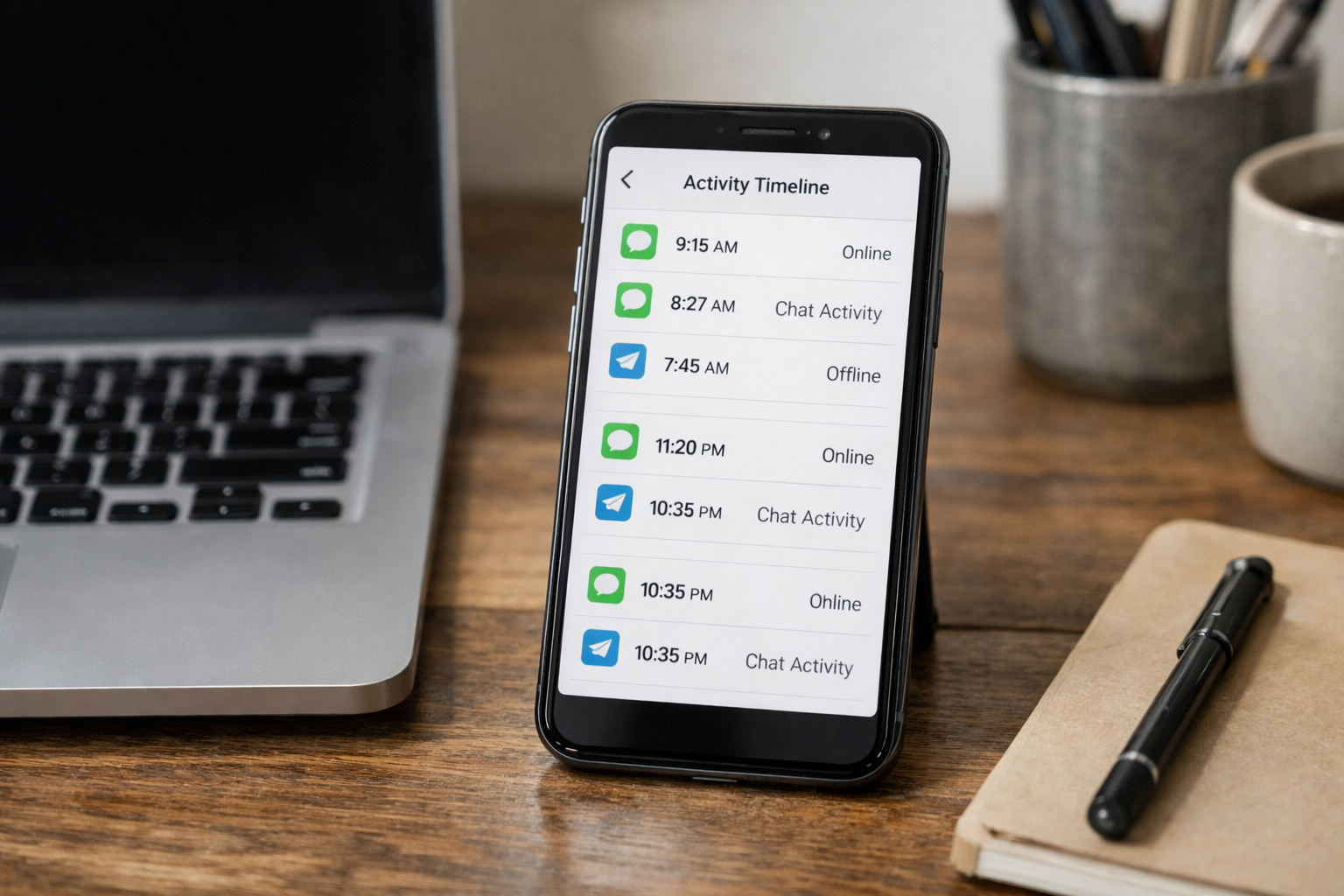
When: WA Family Online Tracker is designed to help with that gap. It focuses on direct monitoring of messaging activity patterns on WhatsApp and Telegram, including seen timing, last seen style activity tracking, tracking of online sessions, and broader online behavior analysis. Rather than making you refresh apps all day, it gives you a more structured way to notice when a person becomes active, how often they appear online, and what sort of routine their usage follows.
This is not about spying drama or turning communication into a detective story. At its best, this type of tool helps people replace guesswork with patterns. That matters when you are trying to coordinate family routines, understand a child’s nighttime messaging habits, or simply stop checking whatsapp web and telegram web every few minutes.
The core problem: messaging apps are easy to use, but hard to monitor meaningfully
A visible status is a limited signal. Privacy settings may restrict what can be observed, and a timeline cannot recover private messages or prove communication between two people. For activity that is available, practical questions include:
- Was this person actually online this evening?
- How often are they checking messages late at night?
- Did I miss the short window when they were active?
- Is their activity getting more frequent, less frequent, or just irregular?
That is where a tracker becomes practical. Instead of catching moments by chance, you get a record of activity windows and a more consistent view of usage patterns. For users who have tried checking through telegram app, whatsapp web, browser tabs, or manual screenshots, this can feel much easier to manage.
Some people first look for solutions because they are frustrated by hidden status settings. Others want a better routine for family awareness. Either way, the main value is clarity. You are not staring at the phone hoping to notice something in real time.
Who When: WA Family Online Tracker is for
This app is not for every kind of user, and that is a good thing. It is most useful for people with a clear reason to understand online activity patterns rather than just one-off curiosity.
1. Parents who want a better sense of messaging habits
A common first-use case is a parent trying to understand whether a child is active on WhatsApp or Telegram during school hours, late at night, or at times when the phone is supposed to be away. A pattern matters more than one isolated moment. If a child appears online for two minutes once, that tells you little. If there is repeated nighttime activity across several days, that is much more informative.
Families who already use tools such as a family location tracker for everyday coordination often see online activity tracking as a separate but related need: one shows where someone is, the other helps explain when they are active in messaging apps.
2. Caregivers coordinating with family members
In some households, fast communication matters. You may be checking whether an older parent, sibling, or another family member has likely seen messages, especially when their reply habits are inconsistent. Looking at online timing can help you decide whether to call, wait, or follow up another way.
3. People who want less compulsive checking
One overlooked use case is reducing repetitive manual checking. Many users bounce between WhatsApp, Telegram, telegram web, and desktop tabs just to see whether someone appears online. Ironically, the search for certainty can create its own habit loop. A tracking-based view can reduce that need by organizing activity information in one place.
4. Users comparing patterns across platforms
Some contacts use WhatsApp heavily while others are more active on Telegram. If communication in your household is split between the two, a single app that looks at both can be more convenient than trying to monitor each platform separately.
What the app actually helps you notice
At a practical level, users usually care about three things:
- Online session timing: when someone becomes active and when they go offline
- Frequency: how often they appear online during a day or week
- Patterns: whether their usage follows a routine, such as late-night checks or short bursts after school
This matters because isolated status checks are often misleading. A single visible moment can make it seem as if someone is always online, while a missed moment can make it seem like they were absent all day. Pattern-based tracking gives more context.
It also helps users who are confused by differences between official apps and modified versions such as gb whatsapp. Activity visibility can vary depending on privacy settings, usage habits, and platform behavior. A tracker does not replace common sense, but it can make those patterns easier to interpret.
Practical first-use scenarios
If you are new to this kind of app, the easiest way to understand its value is through realistic scenarios.
Scenario 1: A parent checking for late-night WhatsApp activity
A parent notices their teenager seems tired every morning but insists they are sleeping on time. The parent does not want to stand over their shoulder or manually open WhatsApp every night. A tracking app helps reveal whether there are repeated online sessions after bedtime. The goal is not punishment first; it is understanding the pattern before starting a conversation.
Scenario 2: Coordinating with a family member who rarely answers
Imagine a family member who often says they “didn’t see the message.” Sometimes that is true. Sometimes they were online briefly but missed the chat. Looking at general activity timing can help you decide whether to send a follow-up, place a call, or wait until their typical active window.
Scenario 3: Comparing WhatsApp and Telegram usage
Some people switch between platforms depending on the contact group. You may notice that someone ignores WhatsApp but checks Telegram regularly. Instead of treating all missed replies the same, you can learn which channel they actually use and when.
Scenario 4: Replacing constant manual status checks
If you have ever refreshed a chat repeatedly just to catch a brief status change, you know how inefficient that is. This is especially common on desktop when people keep whatsapp web open in one tab and telegram web in another. A tracker offers a cleaner starting point: monitor the pattern, then act only when needed.
How to approach your first week of use
The most useful way to begin is not to overinterpret day one. Activity data makes more sense when you observe it over several days.
- Start with one clear question. For example: Is nighttime messaging happening regularly? Or: What hours is this person usually online?
- Track patterns, not emotions. Try not to turn every session into a story. One short login might mean almost nothing.
- Compare weekday and weekend behavior. Routines often shift.
- Use the data to support decisions. If the concern is family communication or device habits, let the pattern guide a practical conversation.
A good first week gives you a baseline. After that, the app becomes more useful because you start recognizing what is normal and what stands out.
Common mistakes new users make
- Expecting a single online moment to explain everything. It usually will not.
- Ignoring privacy settings and platform limits. Hidden status can affect what you see and how you interpret it.
- Using the app without a practical reason. The experience is better when you have a specific question to answer.
- Checking too often anyway. The point is to reduce constant manual watching, not add another layer of anxiety.
Why an introduction like this matters
Many people hear terms like last seen tracking or online status monitoring and immediately assume the use case is extreme. In reality, the most common need is much simpler: understanding communication patterns without guessing. That is why an app like When exists. It is for users who want more structure around WhatsApp and Telegram activity, especially in family settings where timing, habits, and availability matter.
If your main need is seeing online behavior more clearly across messaging platforms, When offers a focused starting point. And if you are exploring similar tools in this category, you may also want to look at Seen: WA Family Online Tracker for WhatsApp and Telegram activity tracking to understand how different apps approach the same core problem.
Use an activity timeline as context for a direct conversation, with agreed boundaries. It cannot establish a person's intentions, health, safety or message content.
For the related workflow and its limits, read: How to Tell When Someone Is Online on WhatsApp.